

What is the average UK energy bill?
Understanding the average energy bill in the UK can help you gauge whether your household spending is typical, and where there may be opportunities to save.
Energy costs vary depending on factors such as your home size, how many people live there, how well your property is insulated and what type of heating system you use. However, national averages provide a useful benchmark.
Here’s a breakdown of typical electricity, gas and heating oil costs across the UK.
Average electricity bills in Great Britain
Under the January 2026 energy price cap set by Ofgem, a typical household in England, Scotland or Wales pays roughly:
• £79 per month for electricity
• £947 per year
These figures are based on a “typical” electricity consumption level used by regulators when calculating the energy price cap.
For smaller households
If you live in a two-person household, electricity usage is usually lower. In this case, typical costs may fall between:
• £673 to £910 per year
• £56 to £75 per month (if paying by direct debit)
Average electricity bills in Northern Ireland
Electricity pricing works differently in Northern Ireland because it is not covered by the same price cap mechanism used in Great Britain.
As of summer 2025, the average electricity bill in Northern Ireland is around:
• £74 per month
• £883 per year
For smaller households, bills are typically lower:
• £550 to £762 per year
• £46 to £64 per month
Average gas bills in Great Britain
Gas is the main heating source for many homes in England, Scotland and Wales.
Under the January 2026 price cap, the typical gas bill for a household using about 12,000 kWh per year is approximately:
• £72 per month
• £809 per year
Smaller households using less gas may pay:
• £610 to £735 annually
Gas bills fluctuate seasonally because heating demand is much higher in winter.
Average gas bills in Northern Ireland
Gas costs in Northern Ireland tend to be slightly higher.
The average household pays around:
• £95 per month
• £1,145 per year
For smaller homes or lower consumption levels, bills are generally between:
• £760 and £950 per year
Average heating oil costs
In rural areas where homes are not connected to the mains gas network, heating oil is still commonly used.
Typical annual costs range between:
• £600 and £1,200 per year
However, this can vary significantly depending on:
• Boiler efficiency
• Insulation quality
• Property size
• Oil market prices
Many households try to reduce costs by buying fuel in bulk or purchasing oil during periods when market prices are lower.
What are you actually paying for in an energy bill?
Your electricity or gas bill is made up of several different components.
Wholesale costs
This is the largest portion of your bill. It covers the price energy suppliers pay to buy electricity and gas from the market.
Standing charges
These are daily fees that cover the cost of maintaining infrastructure, meter services and network access.
Network costs
Energy must travel through a national system of cables and pipes before reaching your home. These charges pay for maintaining and upgrading that infrastructure.
Environmental and social levies
These charges fund government programmes that support renewable energy generation and schemes such as the Warm Home Discount.
VAT
Domestic energy bills include 5% VAT, which is added to the final cost.
Why is electricity more expensive than gas?
Electricity typically costs three to five times more per unit than gas.
There are two main reasons for this.
Gas influences electricity pricing
Electricity prices are often set by the most expensive generator required to meet demand — frequently gas-fired power stations. As a result, when gas prices rise, electricity prices usually increase too.
This happens even when a large proportion of electricity is generated from cheaper sources such as renewables or nuclear.
Levies are mostly applied to electricity
Many social and environmental policy costs are placed on electricity bills rather than gas. These levies help fund low-carbon programmes and renewable energy initiatives.
However, the UK government signalled possible adjustments to some of these levies in the 2025 Autumn Budget.
Why your energy bill might be higher than average
Even if the national average is helpful, your personal bill could differ due to:
• Household size
• Energy efficiency of your home
• Heating system type
• Insulation quality
• Daily energy habits
Two homes with the same tariff can have very different bills depending on how energy is used.
See where your energy money is actually going
Average figures only tell part of the story. The most effective way to reduce your bills is understanding your own usage patterns.
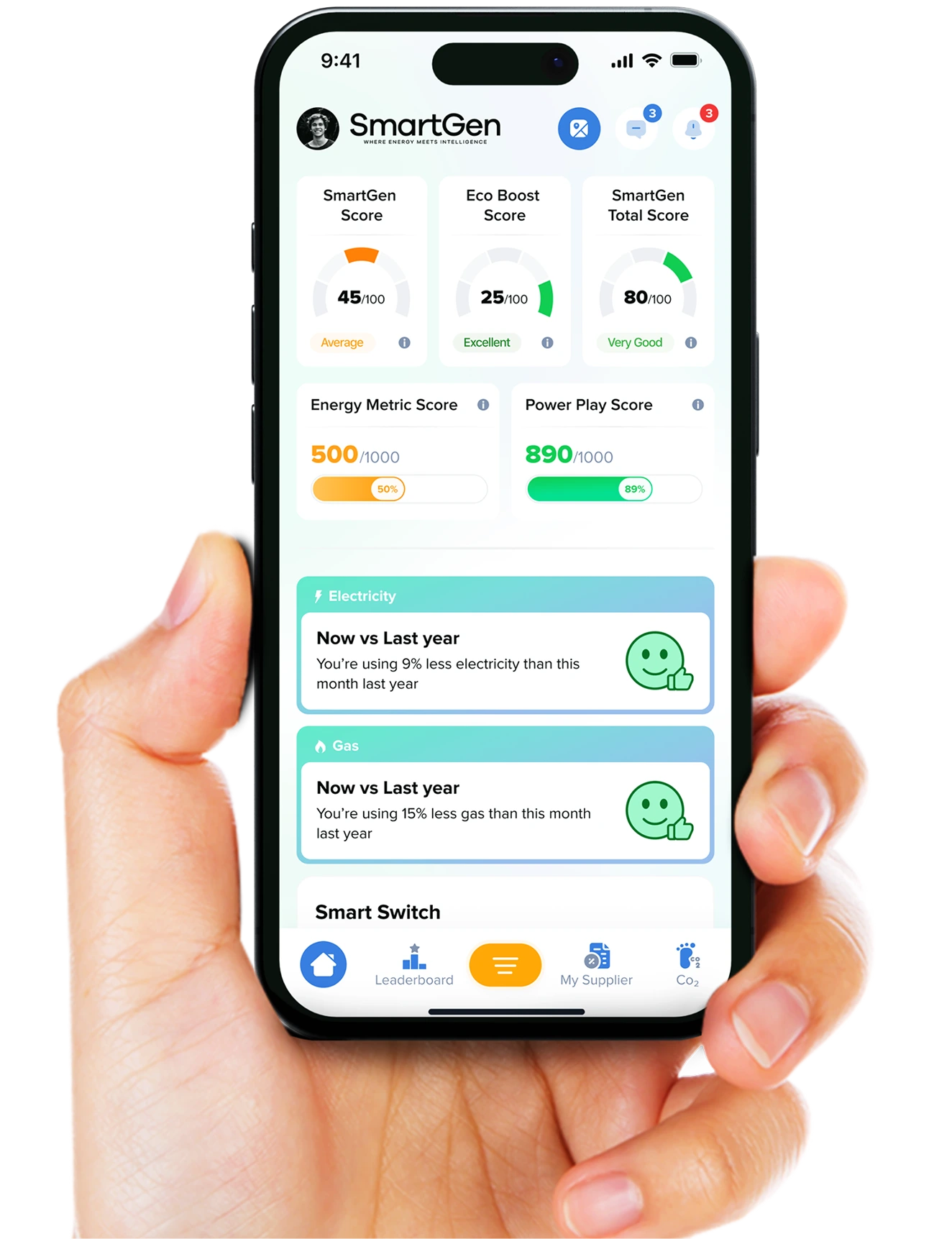
SmartGen analyses your live smart meter data to show exactly where you're overspending and gives you a clear, personalised plan to reduce your bills. Instead of relying on national averages, you can see exactly what’s driving your energy costs at home.
If you’d like to take control of your energy spending, Download SmartGen on the App Store.
Because when you understand your energy use, lowering your bill becomes much easier.